
Cambodia Holidays and Buddhist Festivals
By Jason for Discover Kampot

Last checked: May 2026.
Cambodia has a lot of public holidays, but not all of them are useful for travellers. Some are mostly closure days: banks shut, offices close, schools stop, and not much happens in the street. The holidays below are different. These are the major Cambodian celebrations where visitors can actually see something, join something, or understand the country better by being present at the right time.
The important distinction is public participation. Khmer New Year and Water Festival are easy to join from the street. Pchum Ben, Visak Bochea, and Kathin are more religious and family-centred, but visitors can still take part respectfully at pagodas if they understand what is happening.
Khmer New Year
2026 date: April 14-16, 2026
Khmer New Year, or Choul Chnam Thmey, is the biggest holiday in Cambodia. It comes at the end of the hottest, driest part of the year, just before the rains begin. In that sense it is not only a new year celebration. It is a release. The worst of the heat is nearly over, families are coming home, and the country is waiting for water.
At home, families clean the house, prepare food, honour ancestors, and make offerings. Many people return to their home province, which is why transport fills up so quickly before the holiday. Pagodas are busy with families bringing food, lighting incense, receiving blessings, and making merit.
The public side is louder. Streets fill with music, dancing, water fights, baby powder, games, and temporary stages. In villages and town centres, people play traditional games, children throw water, and groups move from house to house or shop to shop. In tourist areas, the water fight can become the most visible part of the holiday, but it sits on top of a much deeper family and religious celebration.
Tourists can participate easily. Join the water play where it is clearly happening, visit a pagoda in the morning, and accept invitations from locals if they come. The main rule is judgment. Do not throw water at monks, elderly people, food sellers, drivers, or anyone carrying a phone or camera. If you want the quieter side of the holiday, go early in the day before the streets become a party.
Visak Bochea
2026 date: May 1, 2026
Visak Bochea is one of the most important Buddhist days of the year. It commemorates three events in the Buddha’s life: his birth, his enlightenment, and his passing into nirvana. In Cambodia it is a public holiday and a religious observance, not a street party.
The private side of Visak Bochea is devotional. Families go to pagodas, offer flowers, candles, incense, and food, listen to monks chant, and make merit. White clothing is common, especially among older worshippers. The mood is calm and reflective.
Public activity usually happens around pagodas rather than in town squares. In the evening, some pagodas hold candlelit processions, with people walking around the main sanctuary carrying incense, candles, and lotus flowers. Monks chant, families sit together, and the pagoda grounds become the centre of the day.
Tourists can participate by visiting a pagoda respectfully, especially in the evening. Wear modest clothes, remove shoes before entering temple buildings, keep your voice low, and stand back when people are praying. This is one of the easiest Buddhist observances to witness without needing a personal invitation, as long as you behave like a guest rather than a spectator.
Uposatha
2026 date: recurring lunar observance days throughout 2026
Uposatha is the regular Buddhist observance day, roughly weekly, tied to the phases of the moon. It is not a once-a-year festival like Khmer New Year or Pchum Ben. It is part of the continuing rhythm of Buddhist life: new moon, full moon, and the quarter-moon days in between.
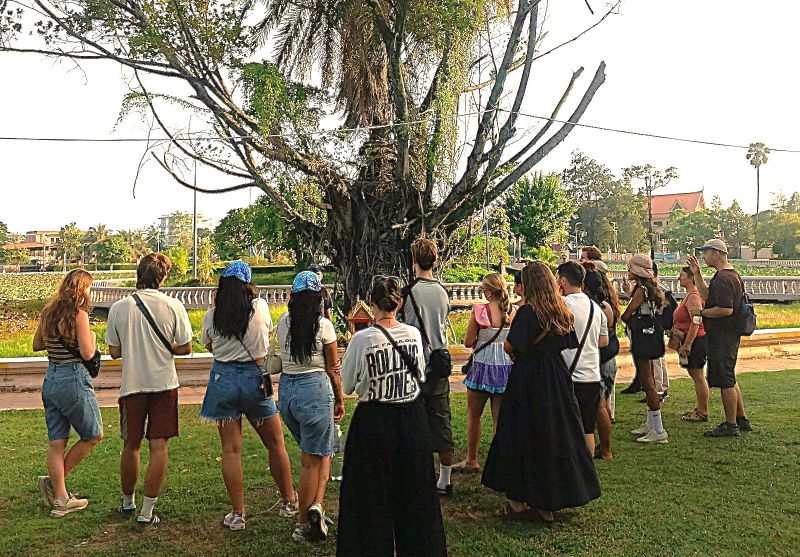
In Kampot, this is one of the more accessible Buddhist ceremonies for visitors because it takes place at the Bo Tree, also called the Po Tree. The bodhi tree matters because the Buddha is said to have attained enlightenment beneath a tree of the same kind. That makes the place feel less like a formal temple visit and more like a living religious space built around a symbol everyone understands.
The private side of Uposatha is discipline and merit-making. More devout Buddhists may keep extra precepts for the day, avoid meat or alcohol, meditate, listen to teachings, offer food, light incense, and spend more time in prayer. For monks and older laypeople, the day has a different weight than an ordinary weekday.
The public side is quiet but open. People gather, chant, make offerings, sit together, and listen. There may not be a spectacle in the tourist sense, but that is exactly why it matters. Uposatha shows Buddhism as regular practice rather than a festival staged around a national holiday.
Tourists can participate by coming respectfully, standing or sitting where directed, and following the rhythm of the people around them. Bring a small donation if you want to contribute. Dress modestly, keep your voice down, and do not treat the ceremony as background for photos. If you want to understand Cambodian Buddhism in Kampot without waiting for one of the big annual festivals, Uposatha at the Bo Tree is the place to start.
Pchum Ben
2026 date: October 10-12, 2026
Pchum Ben is Cambodia’s major ancestor festival. The public holiday lasts three days, but the religious observance runs for fifteen days. It is one of the most important times of the year for Cambodian families.
The meaning is centred on the dead. Families make offerings for deceased relatives, including ancestors going back many generations. People believe that during this period the spirits of the dead may receive food and merit from the living. For families, failing to make offerings is not a small thing. It is a serious duty.
The private side starts before dawn. Families prepare food, rice balls, incense, candles, and donations, then go to pagodas early in the morning. Some people visit several pagodas during the fifteen days. The final days are the busiest, and many Cambodians travel back to their home provinces to be with family.
The public side is quiet but visible. Pagodas fill before sunrise. Monks chant. Families sit together with offerings. Outside the pagoda, roads and markets may be busy early, then strangely quiet later in the day. In towns like Kampot, some restaurants and shops close because owners and staff have gone home.
Tourists can participate, but this is not a festival to treat casually. Go to a pagoda early in the morning, dress modestly, bring a small cash donation, and avoid photographing people at close range while they pray or make offerings. If a local person invites you to come along, accept and follow their lead. Pchum Ben is one of the most powerful times to be in Cambodia, but it requires more respect than enthusiasm.
Kathin
2026 date: October to November 2026, after the monks’ rainy-season retreat
Kathin follows the end of the monks’ rainy-season retreat. During the rainy months, monks traditionally remain based at one pagoda. When that period ends, families and communities bring robes, supplies, and donations to support the monks and the pagoda.
The private side is about merit, generosity, and community obligation. Families contribute money, robes, food, and practical supplies. Villages, businesses, and groups may organise together, with everyone contributing what they can.
The public side can be very visible. Kathin offerings may move through town in processions with music, decorated vehicles, banners, and people dressed neatly for the pagoda. At the pagoda itself there may be chanting, meals, speeches, and formal presentation of robes and donations.
Unlike Khmer New Year or Water Festival, Kathin is not one fixed national street event. It happens pagoda by pagoda, community by community. If you are in Cambodia in October or November and see a decorated procession heading toward a pagoda, there is a good chance you are seeing Kathin.
Tourists can watch respectfully from the side, visit the pagoda if it is open, and join only if invited. A small donation is appropriate. This is one of the best festivals for understanding how Cambodian religious life is organised locally, because it shows the relationship between families, monks, businesses, villages, and pagodas.
Water Festival, Bon Om Touk
2026 date: November 23-25, 2026
The Water Festival, or Bon Om Touk, marks the end of the rainy season and the reversal of the Tonle Sap River. It is one of Cambodia’s largest public festivals, especially in Phnom Penh, where the riverfront fills with boat races, crowds, food stalls, illuminated floats, music, and fireworks.
The meaning is tied to water. Cambodia’s great lake and river system changes direction with the seasons, filling during the rains and draining back toward the Mekong as the water falls. The festival celebrates that turn in the water cycle, the end of the rains, and the beginning of the harvest season.
The private side is lighter than Pchum Ben. Families travel, meet, eat, and spend time together, but this is not primarily an ancestor festival or a household ritual. It is public, noisy, and collective.
The public side is the point. Boat crews race in long traditional boats. Crowds gather along the river. Vendors sell food. In Phnom Penh, the festival can draw enormous numbers of people. Other riverside towns may hold smaller races or simply feel the effect of the national holiday through evening crowds and domestic tourism.
Tourists can participate by watching the races, walking the riverfront, eating with the crowds, and staying for the evening atmosphere. The main concern is practical rather than religious. Crowds can be dense, traffic can be difficult, and hotels may book up. Keep your bag simple, protect your phone, and do not assume you can move quickly across town.
How to Join Respectfully
For pagoda events, cover shoulders and knees. White clothing is appropriate for Buddhist observances, but clean, modest clothing is enough. Remove your shoes before entering temple buildings. Do not touch monks. Women should not hand items directly to monks unless a local person shows the correct way to do it.
Bring small notes for donations. You do not need to copy every ritual. If you are invited to offer incense, flowers, candles, or food, follow the person who invited you. If you are unsure, stand back and watch first.
Ask before taking photos of people praying, monks chanting, food offerings, funerary rituals, or children. Wide photos of buildings and processions are usually easier, but privacy still matters.
Book transport early for Khmer New Year, Pchum Ben, and Water Festival. These are the holidays most likely to affect buses, taxis, hotels, restaurants, and domestic travel prices.
If you want a public celebration, choose Khmer New Year or Water Festival. If you want the religious side of Cambodia, choose Pchum Ben, Visak Bochea, or Kathin.
Further reading
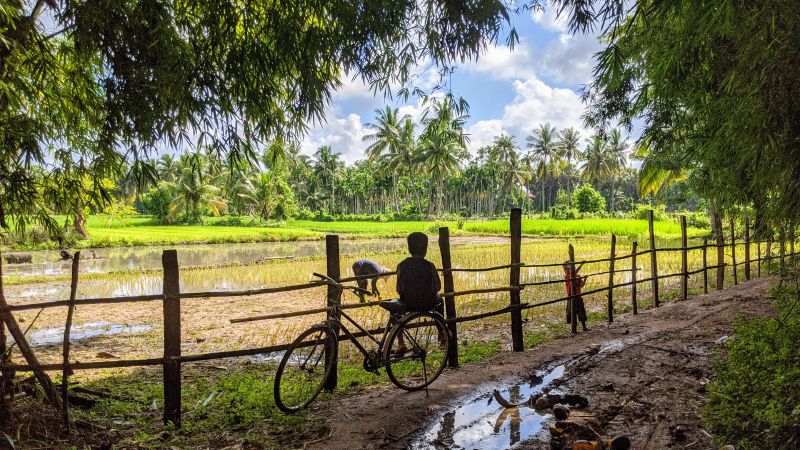
Best Time to Visit Kampot
What's actually happening in Kampot throughout the year, including rice transplanting, harvest season, salt fields, pepper farms, durian season, Buddhist festivals, and national holidays.
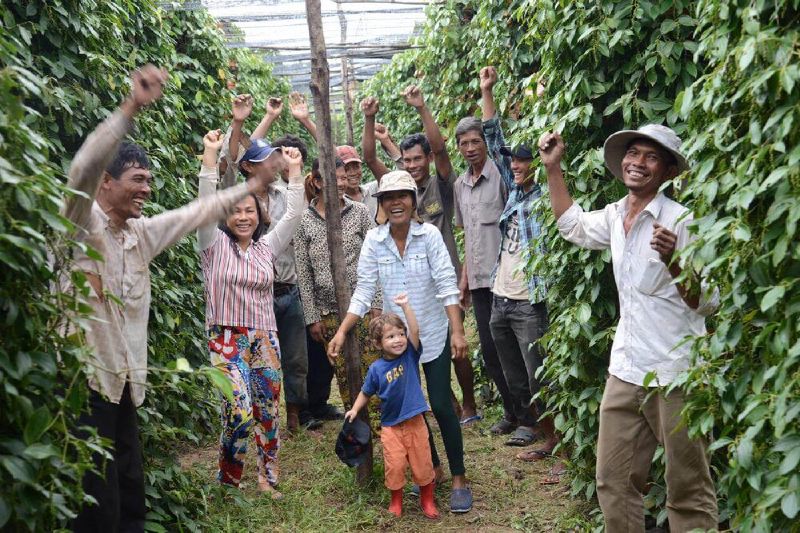
How Many Days in Kampot? A Local's Guide
Why most travellers leave wishing they stayed longer, how to calculate your days, and how to build your stay around the activities you actually want to do.
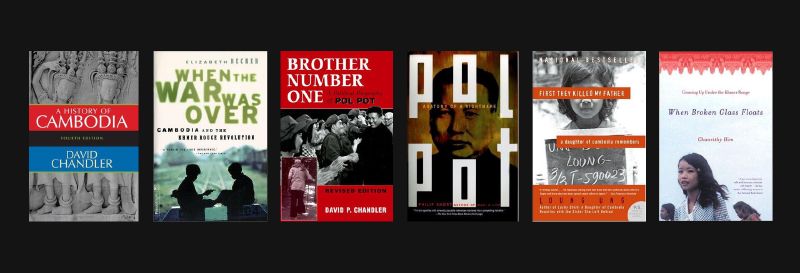
Books About Cambodia: Where to Start Reading
A reading list for understanding Cambodia and the Khmer Rouge, from David Chandler's history to survivor memoirs and the In the Shadows of Utopia podcast.
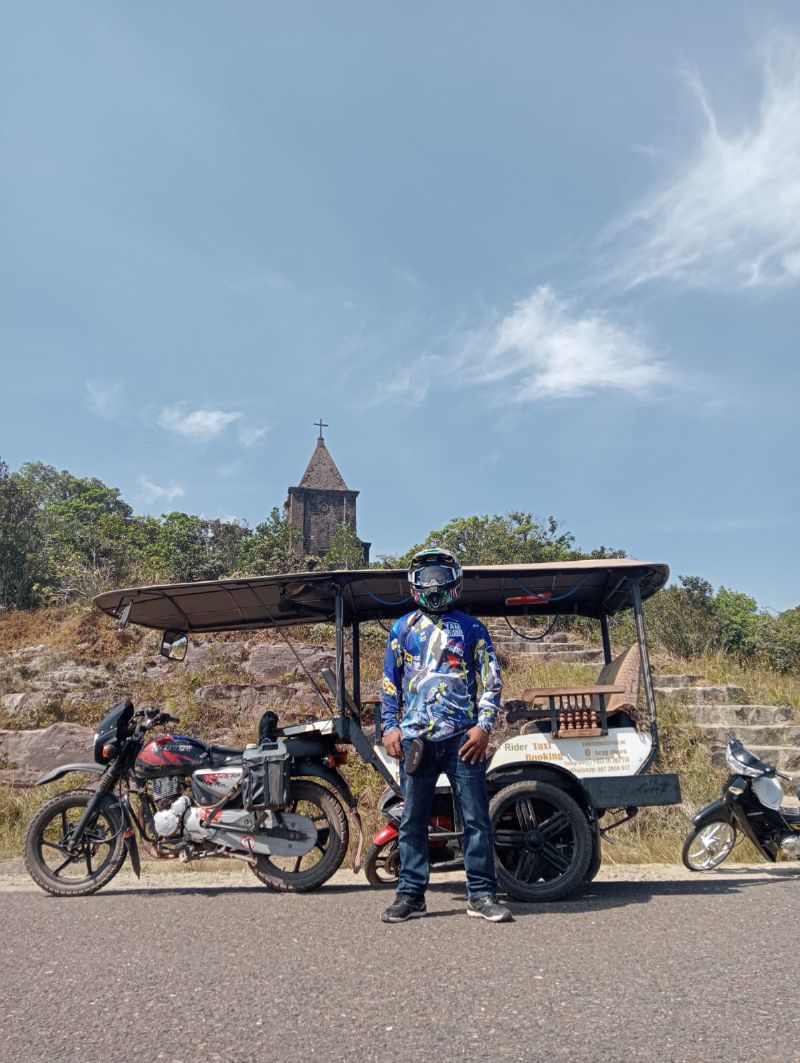
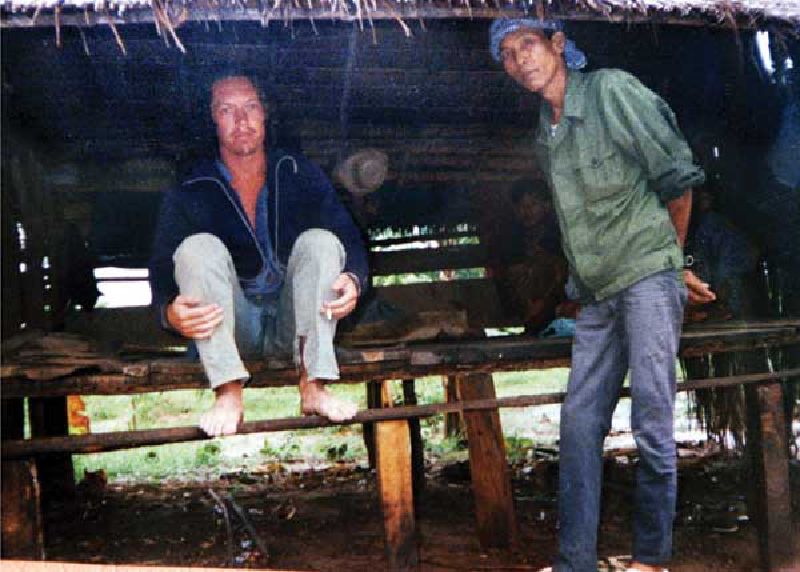
Kidnapped by the Khmer Rouge: The 1994 Kampot Train Attack
In July 1994, three backpackers took a train from Phnom Penh to Sihanoukville. It was a journey that would lead them into the heart of a Khmer Rouge stronghold in Kampot Province.